
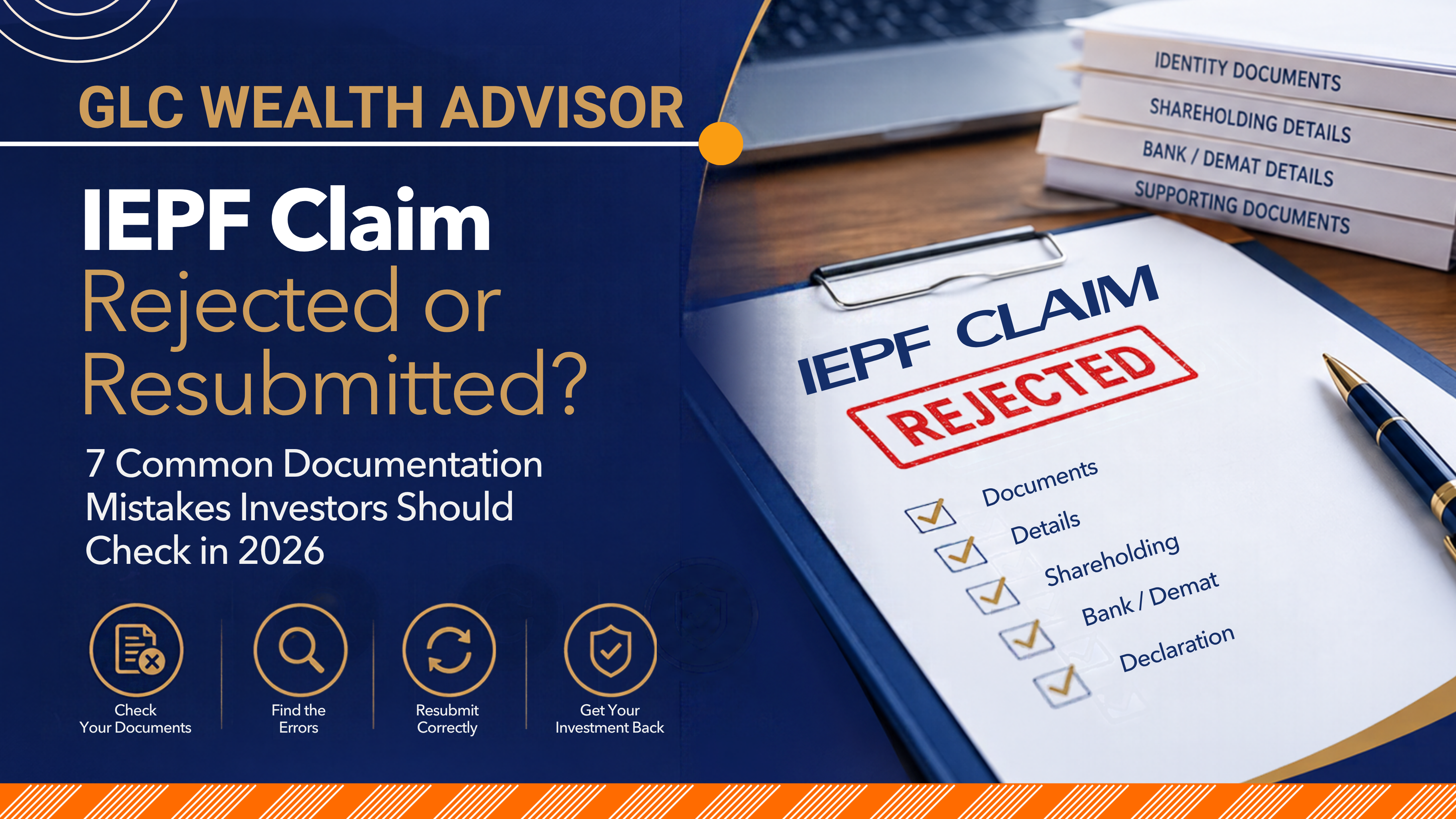
IEPF Claim Rejected? 7 Mistakes to Check in 2026
IEPF Claim Rejected
or Resubmitted? 7 Common Documentation Mistakes Investors Should Check in 2026
If your IEPF claim has been rejected, marked for resubmission, or delayed during verification, incomplete or inconsistent documentation may be one of the reasons. Even if the shares or dividends belong to you, your claim must meet the applicable documentation and verification requirements.
For investors and legal heirs trying to recover old shares or unclaimed dividends, understanding the reason for an IEPF claim objection is an important first step.
Why Can an IEPF Claim Face Rejection or Resubmission?
The Investor Education and Protection Fund (IEPF) facilitates claims for eligible shares and dividends transferred to the Fund under applicable rules. Investors and eligible claimants must follow the prescribed procedure and submit the required supporting documents.
A claim may require clarification or additional documentation if personal details do not match company records, supporting evidence is incomplete, or a procedural requirement has not been fulfilled.

7 Common Documentation Mistakes to Check in 2026
1. Mismatch in Name or Personal Details
Differences between the name recorded on old share certificates, PAN details, bank records, and current identity documents can create verification issues. This can happen because of spelling variations, marriage-related name changes, or outdated records.
What to check:
- Compare the shareholder’s name across all available records.
- Identify spelling differences or changes in personal details.
- Prepare supporting evidence to establish identity and continuity.
2. Incorrect or Incomplete Bank Details
Incorrect account information, mismatched account-holder details, or missing bank documents may delay the claim verification process.
What to check:
- Verify the bank account details.
- Check the account-holder name and required bank proof.
- Ensure the documents meet the current submission requirements.
3. Missing or Incorrect Demat Details
Claims involving shares generally require applicable demat account information and supporting verification. Incorrect beneficiary details or inconsistencies may prevent the process from moving forward.
What to check:
- Verify your demat account details with your depository participant.
- Check the beneficiary information and other required particulars.
- Confirm the requirements applicable to your claim.
4. Missing Supporting Documents
Submitting an application without all the required supporting evidence can lead to an objection. The documents needed may vary depending on whether the claimant is the original shareholder, a joint holder, a nominee, or a legal heir.
What to check:
- Review the latest checklist for your claim category.
- Ensure every required document is included and legible.
- Confirm whether originals, copies, attestations, or additional formalities are required.
5. Incorrect Shareholding or Dividend Information
Older investments can be difficult to trace, particularly when company names have changed or corporate actions have taken place. Incorrect folio numbers, share quantities, or company details can complicate verification.
What to check:
- Compare available share certificates and historical investment records.
- Verify the company name, folio number, and shareholding details.
- Check for relevant mergers, name changes, or other corporate actions.
6. Incomplete Legal-Heir or Transmission Documents
When the original shareholder has passed away, the claimant may need to establish their legal entitlement. Requirements can depend on the circumstances and applicable rules.
What to check:
- Review the death certificate and applicable claimant documents.
- Check the requirements relating to nomination, succession, or transmission.
- Confirm whether additional declarations or legal documents are required.
7. Resubmitting Without Addressing the Objection
Sending the same documents again without resolving the original discrepancy may lead to further delays. A proper resubmission should address each point raised during verification.
What to check:
- Read every objection carefully.
- Prepare a point-by-point response with supporting evidence.
- Follow the permitted resubmission process and deadline.
- Keep copies of all documents and submission acknowledgements.
What Should You Do If Your IEPF Claim Is Resubmitted?
- Read the communication: Identify every discrepancy or missing requirement.
- Review your documents: Compare the submitted information with your original records.
- Resolve the gaps: Obtain corrected records or supporting evidence where necessary.
- Resubmit carefully: Follow the stated process and timeline.
- Track the status: Keep acknowledgements and monitor further communications.
If the reason for resubmission is unclear, seek clarification through the appropriate official channel before submitting the documents again.
What If You Have Lost the Original Share Certificates?
Losing an old physical share certificate does not, by itself, mean that the underlying investment has ceased to exist. However, the recovery process may require additional steps, such as establishing ownership, obtaining duplicate certificates where applicable, and completing the prescribed verification process.
Start by identifying the company, locating available folio or investment records, and checking the current requirements with the company or its Registrar and Transfer Agent (RTA).
How GLC Wealth Advisor Can Help
IEPF recovery can involve document collection, shareholder-record verification, company coordination, and follow-ups. For investors dealing with old investments, missing documents, or legal-heir matters, understanding the applicable process is essential.
GLC Wealth Advisor assists clients with IEPF recovery, physical share assistance, lost share recovery, share transmission, unclaimed dividend recovery, and demat assistance.
The appropriate assistance depends on the facts of the case, the available documents, and the requirements of the relevant authorities and companies.
Frequently Asked Questions
Can an IEPF claim be resubmitted after an objection?
Where the applicable process permits resubmission, the claimant should address the stated objection and follow the instructions and deadline communicated for the case.
Does a documentation objection mean my shares are lost?
Not necessarily. A documentation objection concerns the claim or verification process. Check the reason provided and establish the status of the investment through the appropriate official records.
Can legal heirs claim shares transferred to the IEPF?
Eligible legal heirs may be able to claim shares or dividends, subject to applicable rules, legal entitlement, and prescribed documentation requirements.
How long does IEPF recovery take?
The timeline varies depending on the completeness of the application, the nature of the claim, verification requirements, and processing by the relevant authorities and company.
Where can I check the official IEPF claim requirements?
Visit the official IEPF Authority website and review the applicable instructions. You should also check relevant communications from the company or its RTA.
Conclusion
An IEPF claim that faces an objection or resubmission request deserves a careful review rather than another submission of the same paperwork. Checking personal details, bank and demat information, shareholding records, and legal documents can help identify the issues that need attention.
Before resubmitting, understand the specific objection and verify the latest requirements applicable to your case.
Need Assistance With Your IEPF Claim?
Dealing with old shares, unclaimed dividends, missing certificates, or a complex recovery case? GLC Wealth Advisor can help you understand the available recovery process and documentation requirements.